goodluckpackers.in

Author name: goodluckpackersindia@gmail.com

Packers and Movers in Andhra Pradesh
Uncategorized

Packers and Movers in Andhra Pradesh: Why Good Luck Serves Across the State

Moving to another city can be stressful. You have to pack your belongings, arrange transportation, and make sure everything reaches your new home safely. Choosing reliable packers and movers in Andhra Pradesh can help make the relocation process easier and more organised. Moving Anywhere in Andhra Pradesh Good Luck Packers and Movers serves customers across Andhra Pradesh, making it easier for people to plan their move from one city or town to another. Whether you are moving from Vijayawada to Visakhapatnam, Guntur to Tirupati, or relocating to another town within Andhra Pradesh, Good Luck can help you enquire about your moving requirements. Why Choose Packers and Movers in Andhra Pradesh With Wider Location Coverage? Imagine getting a new job in another city. Along with preparing for your new job, you also need to think about moving your furniture, clothes, kitchen items, and other belongings. Instead of worrying about how to transport everything, you can contact a packers and movers service to discuss your requirements and plan your move. Choosing packers and movers in Andhra Pradesh that cover your required locations makes it easier to enquire about transportation, understand the costs, and plan your relocation. Always confirm service availability for your specific pickup and delivery locations before booking. Every Move Is Different Some people move with just a few bags, while others need to transport an entire household. Good Luck Packers and Movers helps customers discuss their moving requirements based on the number of items they have and the distance they need to travel. Before booking, share your current location, destination, approximate quantity of goods, and packing requirements to understand the available services and charges. Planning to Move Within Andhra Pradesh? Whether you are shifting your home, relocating for a job, or moving to another city for family reasons, choosing the right packers and movers can make the process less stressful. Good Luck Packers and Movers helps you plan your move across Andhra Pradesh, so you can focus on your new beginning while preparing your belongings for the journey. Contact Good Luck to discuss your moving requirements and request a quotation based on your destination, household size, and preferred moving date. For your next relocation, contact Good Luck Packers and Movers in Andhra Pradesh to discuss your moving needs and plan your journey with greater convenience.

Things to Avoid While Packing
city moving, house moving

Things to Avoid While Packing: Common Mistakes and Why Good Luck Doesn’t Make Them

Moving to a new home can be exciting, but packing your belongings the wrong way can turn the experience into a stressful one. From broken glassware to damaged furniture, poor packing can cause problems that could have been avoided with a little care. Not all packing methods offer the same level of protection. Some may save time or money initially, but they can put your belongings at risk during loading, transportation, and unloading. This is why choosing the right packing method matters. Good Luck understands the importance of protecting your belongings during a move. Here are some common packing mistakes to avoid and why careful packing makes a difference. 1. Things to Avoid While Packing: Using Thin Bags Instead of Proper Packing Boxes Putting clothes, kitchen items, or household belongings into thin plastic bags may seem convenient. However, bags can tear easily, and they offer little protection against pressure or sharp objects. When bags are stacked inside a moving vehicle, the items inside can get crushed or mixed up. Loose bags can also make loading and unloading more difficult. Good Luck avoids relying on unsuitable bags for items that need proper protection. Using sturdy packing boxes and suitable materials helps keep belongings organised and easier to handle. 2. Packing Fragile Items Without Protection Glassware, plates, mirrors, and decorative items can break when they bump against one another during transportation. Simply placing these items inside a cardboard box without cushioning leaves them vulnerable to damage. Newspapers alone may not provide enough protection for particularly delicate items, especially when there is empty space inside the box. Good packing involves wrapping fragile belongings individually, adding cushioning, and filling empty spaces to reduce movement. Good Luck focuses on using suitable protection for delicate items instead of leaving them loose inside boxes. 3. Overloading Cartons Filling one large box with books, kitchen utensils, or other heavy items may appear to save packing materials. However, an overloaded carton can become difficult to lift, and its bottom may give way under the weight. Heavy boxes can also increase the risk of injuries during handling. A better approach is to distribute heavy items across smaller, sturdy boxes and use larger cartons for lighter belongings. This makes the boxes easier to carry and helps prevent them from breaking. Good Luck recognises that proper weight distribution is an important part of safe packing and moving. 4. Using Tape Improperly Packing tape may seem like a small detail, but it plays an important role in keeping cartons closed during transportation. Using too little tape, applying it carelessly, or using unsuitable tape can cause boxes to open unexpectedly. When a carton opens while being moved, its contents may fall out, become damaged, or get misplaced. Using suitable packing tape and sealing the bottom and top of each carton properly helps keep belongings secure. Good Luck gives attention to these practical details rather than treating packing as simply putting items into boxes. 5. Mixing Different Types of Items in One Box Packing kitchen utensils, glass decorations, toiletries, and electronic accessories together without organisation can create unnecessary problems. Hard objects may scratch delicate items, while liquid products may leak and damage other belongings. Mixed boxes can also make unpacking more confusing because it becomes difficult to find specific items. Keeping similar belongings together, separating fragile items, and securing liquid containers can make a move more organised. Labelling boxes by room or contents can also help during unloading. Good Luck understands that organised packing is not just about protecting belongings. It also makes settling into a new home easier. 6. Leaving Furniture and Electronics Unprotected Furniture can develop scratches, dents, or damaged corners if it is moved without suitable protection. Televisions, computers, and other electronic devices may also be vulnerable to impacts, dust, and movement. Wrapping these items in whatever material is available may not offer enough protection, especially during long journeys. Using appropriate wrapping, cushioning, and protective covers helps reduce the chance of damage. Furniture should also be handled carefully, while electronic devices should be packed according to their size and fragility. Good Luck gives importance to choosing packing methods according to the type of item being moved. Things to Avoid While Packing: Why Good Packing Matters Packing is not simply about putting everything into boxes. It involves choosing suitable materials, protecting fragile belongings, distributing weight properly, and making sure everything can be handled safely. Poor packing can lead to broken items, scratched furniture, misplaced belongings, and unnecessary stress. Good packing helps reduce these risks and makes the moving process more organised. That is why Good Luck does not treat packing as a task to rush through. Careful preparation and appropriate materials help give belongings better protection throughout the move. Make Your Next Move Less Stressful Before moving, take some time to sort your belongings, separate fragile items, and identify anything that needs special care. Avoid using damaged cartons, overloading boxes, or leaving valuable items unprotected. Choosing a packing and moving service that pays attention to these details can make the process easier and give you greater peace of mind. With Good Luck, the goal is to make moving more organised, careful, and convenient, so you can focus on settling into your new home. Remember the important Things to Avoid While Packing to protect your belongings and make your next move safer, smoother, and less stressful with Good Luck.

Local Shifting vs. Intercity Moving: Cost Comparison
city moving, house moving

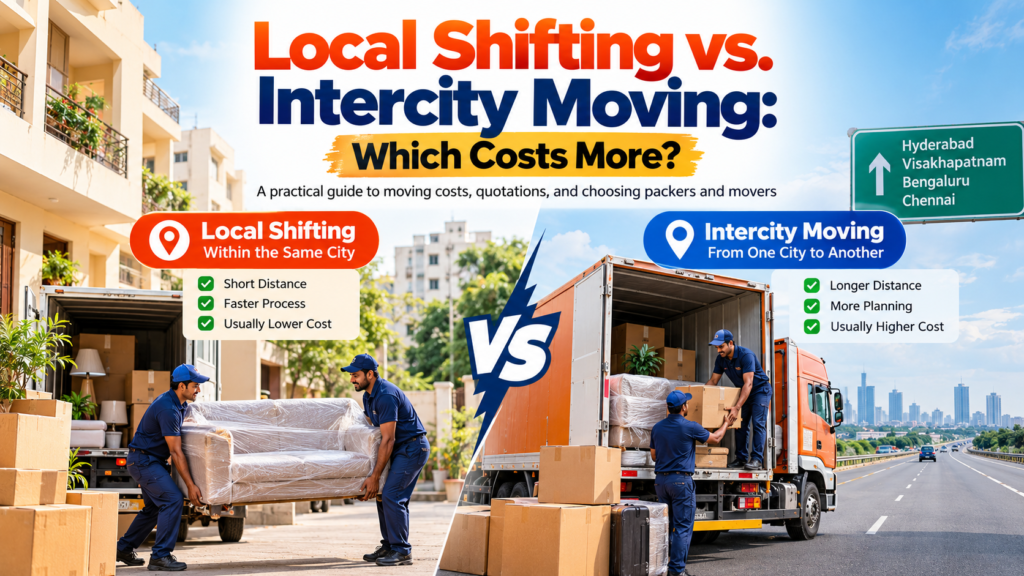
Local Shifting vs. Intercity Moving: Which Costs More?

Local Shifting vs. Intercity Moving is an important comparison to understand when planning a household relocation. Moving house can be exciting, but one of the most common questions is, “How much will it cost to shift my goods?” Many people wonder whether local shifting is cheaper than intercity moving. However, even a local move can become expensive depending on the services required. In this article, we will discuss: What is local shifting? What is intercity moving? Local shifting vs. intercity moving: cost comparison. How much does local shifting cost? How much does intercity moving cost? How to cut costs when hiring packers and movers. How to choose the right packers and movers. Frequently asked questions. Let us start with the basics. 1. What Is Local Shifting? Local shifting involves moving household goods and other belongings from one location to another within the same city or nearby area. For example, shifting your belongings from Benz Circle to Poranki or another neighbourhood within Vijayawada is considered local shifting. Compared with an intercity move, local shifting generally requires less travel time and simpler coordination. Depending on the size of your home, the quantity of goods, and the availability of labour, the move may be completed within a few hours or a day. Cost Factors Involved in Local Shifting Distance between the pickup and delivery locations. Quantity, size, and weight of household goods. Packing materials, including bubble wrap, stretch wrap, and cartons. Loading and unloading labour charges. Building accessibility, including lifts, staircases, gate width, and parking facilities. Additional services such as furniture dismantling and reassembly. Local shifting is suitable for people moving within the same city who want a convenient and cost-effective relocation service. 2. What Is Intercity Moving? Intercity moving involves transporting household goods from one city to another. Examples include moving from Vijayawada to Hyderabad, Visakhapatnam, Bengaluru, Chennai, or another city. Many people hire professional packers and movers for intercity relocation because it involves longer distances, transportation planning, secure packing, and delivery coordination. Cost Factors Involved in Intercity Moving Distance between the origin and destination cities. Vehicle size and transportation requirements. Packing materials and protective packaging. Loading and unloading labour charges. Route conditions, tolls, and applicable transportation charges. Additional luggage, special items, and handling requirements. Delivery timelines and any additional services requested. Intercity moving is suitable for people relocating for employment, education, business, or personal reasons. 3. Local Shifting vs. Intercity Moving: Cost Comparison Understanding the difference between local and intercity relocation costs helps you plan your moving budget and compare quotations effectively. Cost Factor Local Shifting Intercity Moving Transportation Usually lower Usually higher Fuel and tolls Generally lower Can be significantly higher Packing Depends on the service selected May require additional protection Labour Depends on workload and time Includes pickup and destination handling Travel time Generally shorter Generally longer Planning Usually simpler Requires more coordination Overall cost Usually lower Usually higher Which is more expensive: local shifting or intercity moving? Intercity moving is generally more expensive because of the longer transportation distance, fuel expenses, tolls, and delivery coordination. However, the final cost depends on the quantity of goods, packing requirements, accessibility, and services included in the quotation. 4. How Much Does Local Shifting Cost? The cost of local shifting depends on the size of your home, the quantity of goods, the distance between the pickup and destination points, and the services you select. For example, shifting a few household items will generally cost less than relocating an entire three-bedroom home with furniture, appliances, and professionally packed belongings. Things to Consider When Getting a Local Shifting Estimate How many rooms need to be shifted? How much furniture and how many appliances need transportation? Do you need complete packing services or transportation only? Are lifts available at both locations? Is the building accessible to the moving vehicle? Do you need furniture dismantling or reassembly? Providing these details will help packers and movers prepare a more accurate cost estimate. 5. How Much Does Intercity Moving Cost? The cost of intercity moving depends on the origin and destination cities, the quantity and volume of goods, the vehicle required, and the level of packing protection needed. For example, moving a one-bedroom household from Vijayawada to Hyderabad will generally cost less than moving a fully furnished three-bedroom household from Vijayawada to Bengaluru, assuming comparable service requirements. Not every quotation includes the same services. Ask for a detailed written estimate so you can understand exactly what you are paying for. Things to Consider When Getting an Intercity Moving Estimate The quantity and approximate volume of your goods. The origin and destination addresses. Whether packing materials and packing labour are included. Special handling requirements for fragile or valuable items. The expected pickup and delivery dates. Questions to Ask When Comparing Quotations Which services are included in the final price? Are packing materials and labour charged separately? Are transportation charges and toll taxes included? Are loading and unloading included? Are furniture dismantling and reassembly available? Are there additional charges for storage, special handling, or other services? What protection or damage-claim options are available? Always obtain a written quotation and clarify additional charges before confirming your move. 6. How to Cut Costs When You Hire Packers and Movers Whether you are moving within your city or relocating to another state, a few practical steps can help control your moving expenses. Declutter Before Packing Sort through your belongings and identify items you no longer need. Donate, sell, or responsibly dispose of unwanted goods. Moving fewer items may reduce the packing time, vehicle space, and overall shifting cost. Compare Quotations Request written quotations from two or three packers and movers companies. Compare the services, transport arrangements, packing quality, and additional charges rather than choosing solely on the quoted price. Pack and Prepare in Advance Organise your belongings before moving day and keep important documents and personal items separate. If you plan to pack some items yourself, ask the moving company whether this will reduce the overall quotation. Choose the Right Vehicle A
Pack Clothes for a House Move: Ultimate Guide
house moving

Pack Clothes for a House Move: The Ultimate Guide

Pack Clothes for a House Move with a proper plan to make your relocation easier and stress-free. Moving to a new house can be exciting, but packing everything can often feel overwhelming. Clothes require special attention because most households have a wide variety of garments, including everyday clothing, office attire, expensive sarees, suits, and delicate fabrics. Learning how to pack clothes properly ensures that your garments remain clean, organised, and protected during transportation. This guide explains the best packing practices, common mistakes to avoid, and how professional packers and movers can help. How to Pack Clothes for a House Move 1. Organise Your Clothes According to Use Before packing, sort your clothes according to their purpose and frequency of use. Moving house is an excellent opportunity to remove unwanted garments and reduce the number of boxes you need. Everyday wear, including T-shirts, jeans, and trousers. Office wear and formal clothing. Traditional wear, including sarees, lehengas, and suits. Seasonal clothing. Delicate and expensive garments. Clothes you no longer use. Donate wearable clothes you no longer need and discard garments that are no longer usable. Sorting everything beforehand will make packing and unpacking easier. 2. Wash and Dry Clothes Before Packing Always ensure your clothes are clean and completely dry before placing them in boxes. Damp or sweaty garments can develop unpleasant odours and may encourage mildew during storage. Wash dirty clothes before packing. Dry all garments thoroughly. Check pockets for coins, keys, receipts, and other objects. Separate clothes that require special care. Keep freshly cleaned clothes away from dusty packing areas. 3. Choose the Right Clothes Packing Materials Selecting suitable packing materials helps protect your garments and keeps them clean throughout the move. Durable cardboard boxes. Suitcases and travel bags. Wardrobe boxes with hanging rails. Garment covers. Clean packing paper. Vacuum storage bags for suitable garments. Use clean, dry, sturdy boxes and avoid overfilling them. Smaller boxes are generally easier to carry when filled with heavier clothing. 4. Fold Everyday Clothes T-shirts, jeans, trousers, and other everyday garments can usually be folded or rolled for efficient packing. Group similar clothing items together. Place heavier garments beneath lighter ones. Pack heavy clothes separately when practical. Avoid overloading individual boxes. Use smaller boxes for heavier garments. Rolling casual clothes can save space in suitcases and travel bags. Choose folding or rolling according to the fabric and garment type. Label each box clearly with its contents, such as everyday wear or office clothing. 5. Pack Expensive and Delicate Clothes with Care Traditional and expensive garments often need extra protection. Silk sarees, lehengas, embroidered dresses, and designer suits should be packed carefully to reduce the risk of damage. Use clean garment covers for delicate clothes. Avoid placing heavy items on embroidered garments. Keep delicate clothing away from shoes, toiletries, and sharp objects. Use appropriate protective packing materials. Follow the garment manufacturer’s care instructions. Label boxes containing valuable garments and inform your packers and movers about any special handling requirements before the move. 6. Prevent Wrinkles in Hanging Clothes Shirts, dresses, blazers, and formal trousers can wrinkle when packed incorrectly. Wardrobe boxes with hanging rails are a useful option for transporting these garments. If wardrobe boxes are unavailable, group similar garments on hangers, cover them with garment covers, and position them carefully to prevent unnecessary pressure during transportation. 7. Pack Seasonal Clothes Separately Keep seasonal clothing separate if you do not plan to use it immediately after moving. Pack winter wear in a separate box. Keep summer clothing together. Pack raincoats and seasonal accessories separately. Label each box for easy identification. Vacuum storage bags can reduce the volume of bulky items such as blankets and suitable winter clothing. Do not compress damp garments or delicate fabrics that could be damaged. 8. Keep Essential Clothes in a Separate Bag One common moving-day mistake is packing clothes that you will need immediately. Prepare a separate bag with enough clothing for the first few days in your new home. Everyday outfits and undergarments. Nightwear and comfortable clothing. Towels and travel essentials. Clothing needed for special occasions. Keep this bag accessible instead of packing it deep inside the moving vehicle. You can then change clothes and settle in without opening multiple boxes. 9. Label Clothes Boxes Clearly Clear labelling helps you identify boxes quickly and allows movers to place them in the correct rooms. Bedroom 1 – Everyday Clothes Bedroom 2 – Winter Wear Master Bedroom – Formal Clothes Delicate Garments – Handle with Care Essentials – Open First You can also number your boxes and maintain a simple inventory, especially when relocating a large family. Avoid displaying unnecessary personal information on the outside of boxes. 10. Avoid Common Clothes Packing Mistakes Even a well-planned move can become difficult if you overlook basic packing precautions. Avoid these common mistakes: Packing damp clothes: Moisture can cause unpleasant odours and encourage mildew. Overfilling boxes: Heavy boxes are harder to carry and may tear during transportation. Mixing everything together: Unsorted clothing makes unpacking slower and more confusing. Using unsuitable vacuum bags: Compression may damage delicate or structured garments. Packing valuables with ordinary clothes: Keep jewellery, cash, and important documents secure and with you. Forgetting essential outfits: Keep clothing for the first few days in a separate, accessible bag. 11. How Packers and Movers Can Help Pack Clothes Packing an entire family wardrobe can be time-consuming, particularly when you have children, valuable garments, or delicate fabrics. Professional packers and movers can help organise, pack, label, and transport your clothes using suitable materials. Before booking a relocation service, ask these important questions: Are packing materials included in the quotation? Can you provide wardrobe boxes for hanging clothes? How will delicate and expensive garments be protected? Will boxes be labelled according to their destination rooms? Are packing, loading, transportation, and unloading included? Confirm the scope of services, insurance options where available, and all applicable charges before finalising your booking. Final Thoughts Learning how to Pack Clothes for a House Move can make your relocation more

Scroll to Top